


NHẬN BÁO GIÁ
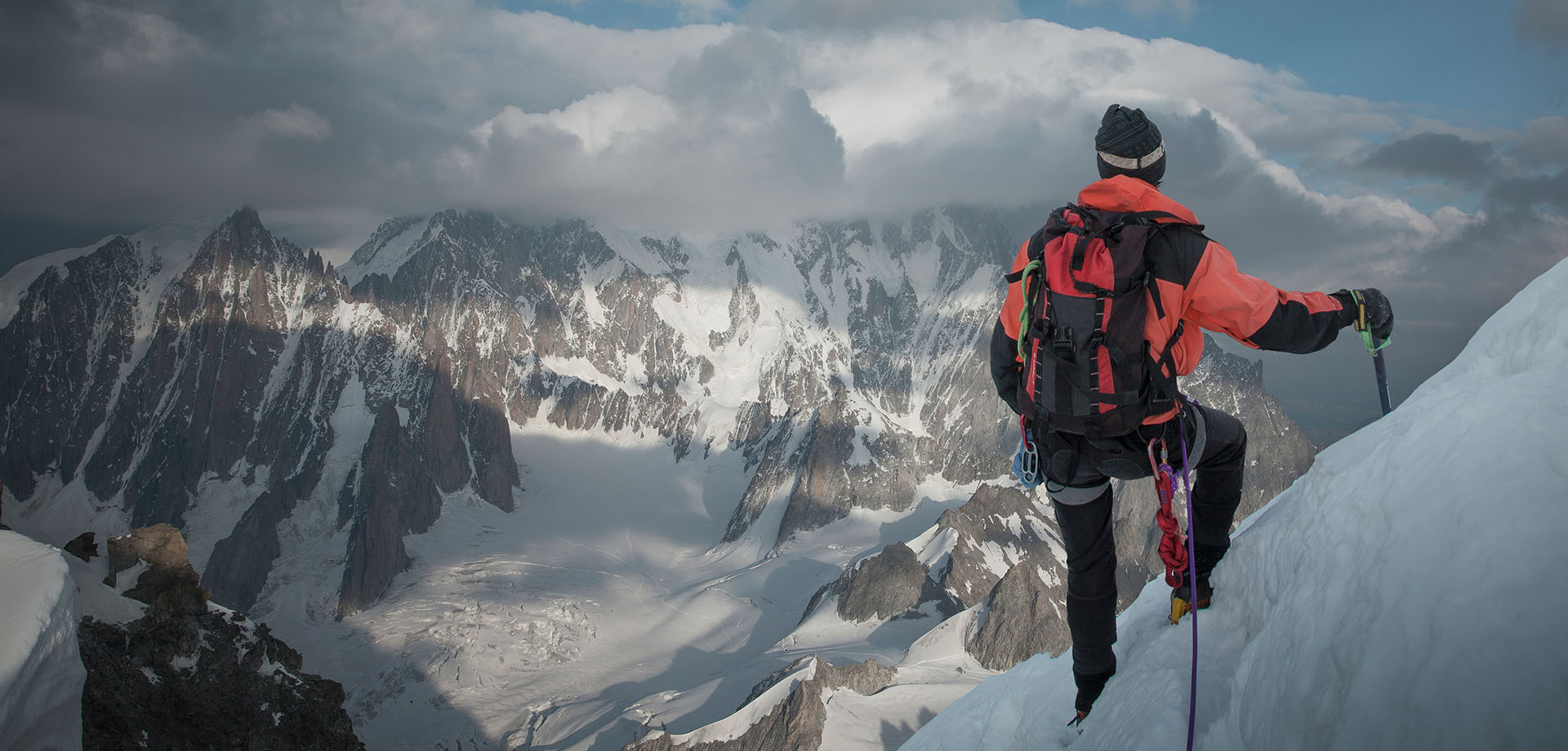
Thiết bị leo núi tùy chỉnh
Tìm kiếm
Nhà sản xuất thiết bị leo núi
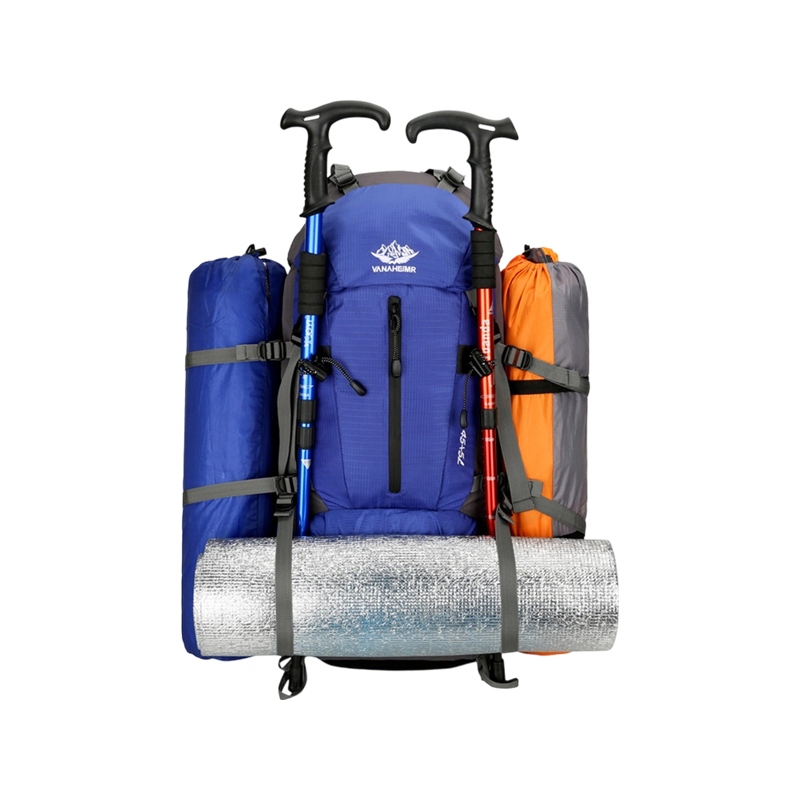
Bao gồm tất cả các thiết bị cốt lõi cần thiết cho hoạt động leo núi và đi bộ đường dài chuyên nghiệp, từ ba lô, hệ thống gậy leo núi cho đến các phụ kiện chức năng khác nhau. Cho dù đó là chuyến đi nhanh trong ngày hay chuyến thám hiểm vùng cao kéo dài nhiều ngày, chúng tôi đều cung cấp đầy đủ các lựa chọn từ túi gấp nhẹ đến ba lô chuyên nghiệp có sức chứa lớn, cùng với các thiết bị phụ trợ như gậy leo núi bằng hợp kim nhôm và gậy đi bộ chống sốc, cũng như các công cụ thiết thực như ghế gấp và phụ kiện đựng đồ, mang đến cho mọi người leo núi trải nghiệm leo núi an toàn, thoải mái và hiệu quả.

Giới thiệu về CragHaven
CragHaven Outdoor — thương hiệu quảng cáo ngoài trời và đối tác sản xuất quốc tế, có trụ sở tại Hàng Châu, Trung Quốc.
As Trung Quốc Nhà sản xuất thiết bị leo núi và Nhà cung cấp thiết bị leo núi, chúng tôi tập trung vào các tình huống leo núi, đi bộ đường dài và cắm trại, cung cấp các thiết bị ngoài trời có chức năng, đáng tin cậy và giá trị lâu dài cho thị trường toàn cầu.
Tên 'CragHaven' phản ánh sự cân bằng và ổn định trong tự nhiên. Triết lý này định hình cách tiếp cận của chúng tôi trong thiết kế sản phẩm, lựa chọn vật liệu và giải pháp sản xuất.
Sản phẩm liên quan
Tin tức
-
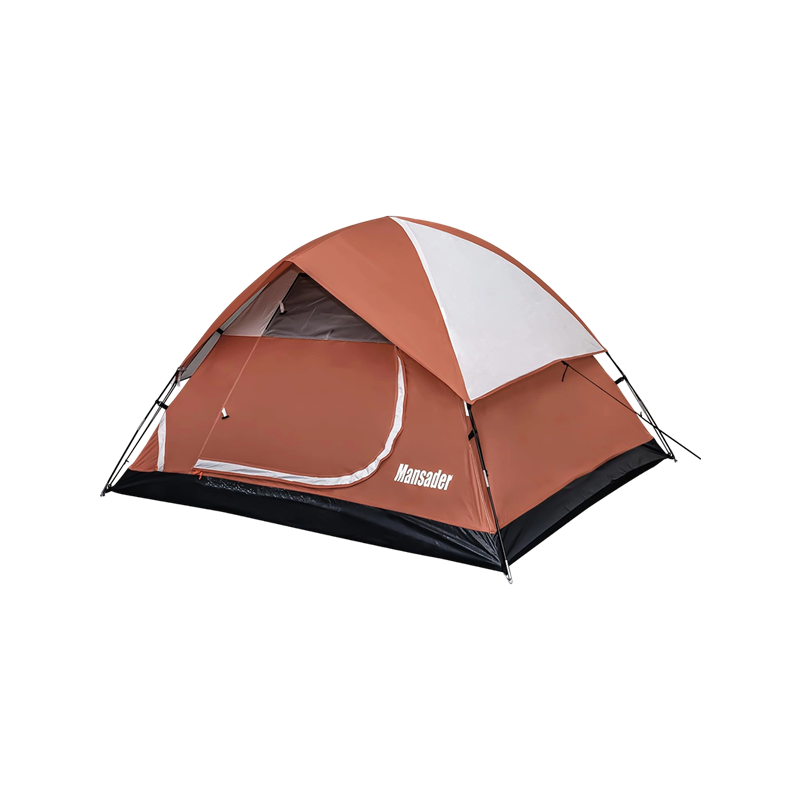
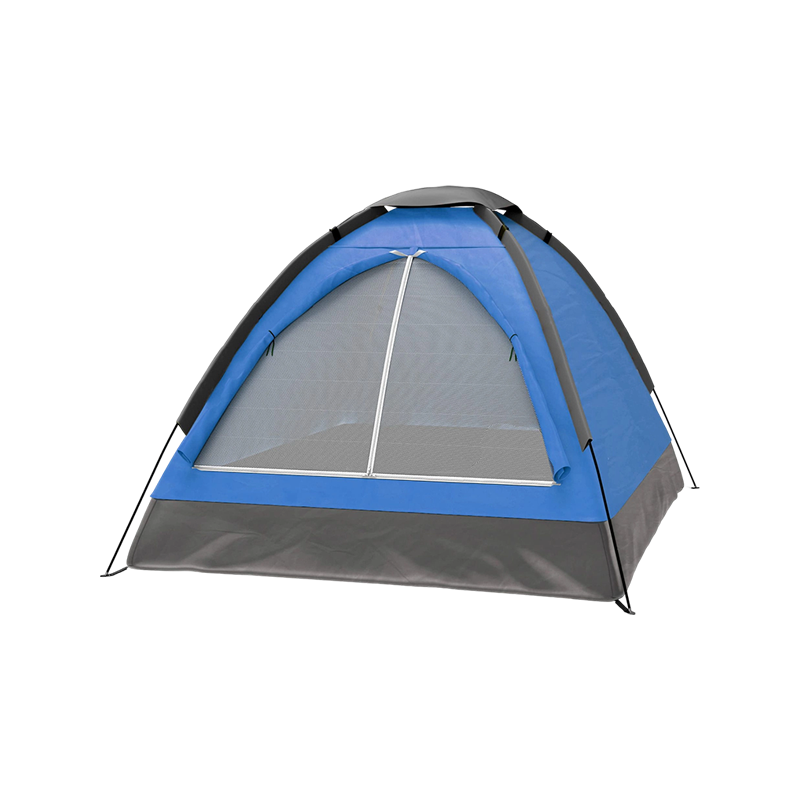
Đối với nhóm mua sắm đang xây dựng danh sách lều cho mùa giải ngoài trời năm 2026, Lều nhanh và lều truyền thống quyết định là sự đối đ...
ĐỌC THÊM -
Lộ trình 5 ngày qua thung lũng Chamonix cần 7,5kg thực phẩm, 2kg nước, lều 1,5kg, túi ngủ 1kg và 2kg quần áo. Đó là 14kg trước khi đóng gói. Với tải t...
ĐỌC THÊM -
Tin tức ngành Ngày 3 tháng 8 năm 2026 Bởi Nhóm Kỹ Thuật Pilewind đọc 10 phút Việc lựa chọn lều cắm trại phù hợp có th...
ĐỌC THÊM -
Tin tức ngành Một trong những sai lầm phổ biến nhất mà những người mới cắm trại mắc phải là nhầm lẫn giữa lều cắm trại đeo ba lô và lều cắm trại...
ĐỌC THÊM -
Tin tức ngành Bởi Nhóm Kỹ Thuật Pilewind đọc 11 phút Việc lựa chọn vải lều là một trong những quyết định quan trọng nhất trong...
ĐỌC THÊM
Biểu mẫu phản hồi
Leo núi Kiến thức ngành
How Do Layered Material Systems in Mountaineering Gear Manage Moisture Vapor Transfer While Maintaining Thermal Insulation at Sub-Zero Temperatures?
In mountaineering, the human body is both a heat source and a moisture generator. At sub-zero temperatures, a climber produces between 500–1,000 ml of sweat per hour during high-output sections, yet the surrounding air can hold less than 2 g of water vapor per cubic meter at -20°C. This creates a fundamental paradox: if moisture remains trapped against the skin, it conducts heat away 25 times faster than dry air, leading to hypothermia. But if the system is too breathable, it loses precious warmth. At CragHaven Outdoor, an outdoor brand and cross-border manufacturing partner based in Hangzhou, China, we believe that excellent outdoor products are not built on a pile of parameters, but on a deep understanding of the environment, usage patterns, and the test of time. This article dissects how layered material systems—engineered from the skin out—solve the moisture-vapor-insulation paradox through advanced textile physics, membrane technology, and strategic layering architecture.
1. The Physics of Moisture Vapor Transfer (MVT) in Cold Environments
Moisture vapor transfer in mountaineering clothing is driven by two mechanisms: diffusion (water vapor molecules moving from high concentration—near the skin—to low concentration—the outside air) and convection (pumping of air through fabric during movement). At sub-zero temperatures, the vapor pressure gradient is steep, but the relative humidity (RH) near the skin approaches 100%, while external RH can be below 20%. However, if the outer layer's temperature drops below the dew point, vapor condenses into liquid water inside the insulation—a phenomenon known as interstitial condensation, which destroys thermal performance.
- Water vapor transmission rate (WVTR) – Measured in g/m²/24h, this indicates how much sweat vapor can escape. Premium mountaineering shells achieve WVTR ≥ 20,000 g/m²/24h using expanded polytetrafluoroethylene (ePTFE) or electrospun polyurethane membranes. Mass-market "waterproof" fabrics often deliver only 5,000–8,000 g/m²/24h, trapping sweat and causing internal icing.
- Resistance to evaporative heat loss (Ret) – A lower Ret value means better breathability. ISO 11092 specifies Ret in m²·Pa/W. Premium layers target Ret ≤ 6, while budget equivalents often exceed Ret > 15, creating a "sauna effect" that accelerates heat loss through wet conduction.
- Thermal conductivity of wet vs. dry insulation – Dry down or synthetic insulation has a thermal conductivity of about 0.025 W/m·K. When just 5% moisture by weight is absorbed, conductivity rises to 0.045 W/m·K—a 80% increase in heat loss. At 15% moisture, the insulation becomes nearly useless, with conductivity exceeding 0.08 W/m·K.
2. The Four-Layer System: Architecture of Moisture Management
Modern mountaineering gear relies on a strategic four-layer system, each with a specific moisture-transfer and thermal function. At CragHaven Outdoor, we design these layers to work in harmony, ensuring that vapor moves outward while warm, dry air stays trapped near the body.
Layer 1: Base Layer (Moisture Wicking and Fast-Drying)
- Fiber type and morphology – Our base layers use hollow-core polyester with a trilobal cross-section, creating capillary channels that pull liquid sweat away from the skin via wicking rates > 120 mm/10 min (AATCC 197). Mass-market cotton or basic polyester wicks at only 30–50 mm/10 min, leaving sweat in contact with skin.
- Moisture regain – This measures how much water a fiber absorbs relative to its dry weight. Polyester has a regain of only 0.4%—meaning it absorbs almost nothing, keeping vapor in gaseous form for transport. Merino wool, while warmer when wet, has 13–15% regain, which delays vapor transport and increases chill risk in extreme cold.
- Drying rate – Our proprietary knit structure dries from 50% to 10% moisture content in < 45 minutes (at 20°C, 65% RH). Mass-market base layers require > 90 minutes, leaving the climber cold during rest breaks.
Layer 2: Mid Layer (Insulation with Vapor Permeability)
- Synthetic vs. down insulation – Down provides superior warmth-to-weight (loft of 800–900 fill power), but loses 80% of its loft when damp. Our CragHaven Outdoor mid layers use hydrophobic-treated down (DWR-treated) that retains 85% loft even at 30% RH, combined with breathable ripstop baffles that allow vapor to escape. Mass-market down with no treatment retains only 30–40% loft under the same conditions.
- Air permeability of insulation fabric – Measured in cm³/cm²/s (at 100 Pa), this controls how readily vapor can pass through baffles. Our shell fabrics for mid layers are rated at 5–8 cm³/cm²/s, balancing wind resistance with vapor escape. Budget mid layers often use non-breathable calendered fabrics at < 1 cm³/cm²/s, trapping vapor.
- Thermal resistance (R-value) per gram – Our synthetic insulation (continuous filament) delivers R-value of 1.8 per 100 g/m², compared to standard polyester batting at R-value 1.1 per 100 g/m²—a 64% advantage in warmth per weight.
Layer 3: Shell Layer (Weather Protection with Controlled Breathability)
- Membrane technology – We use ePTFE membranes with monolithic polyurethane coatings that are microporous (pores 0.2–0.5 μm) to allow vapor diffusion while blocking liquid water (which has a droplet size > 100 μm). Our membrane achieves water entry pressure > 25,000 mmH₂O (hydrostatic head) while maintaining WVTR > 25,000 g/m²/24h.
- Moisture vapor transfer under compression – Backpack straps and harnesses compress the shell, reducing breathability. Our face fabric uses 3D-woven spacer structures that retain 85% of WVTR under 5 kPa pressure, while standard laminates drop to 40% of WVTR under the same load.
- Durable Water Repellent (DWR) and vapor transmission – DWR treatments on the outer face prevent "wet-out" (fabric saturation), which can increase thermal conductivity by 400%. Our CragHaven Outdoor shell uses a C6 fluoropolymer DWR with a water contact angle of 115°, maintaining breathability even after 20 wash cycles. Budget DWRs degrade after 3–5 washes, causing the shell to wet-out and lose vapor transfer capability.
Layer 4: Vapor Barrier Layer (Optional, for Extreme Cold Below -30°C)
- In extreme expeditions, a non-breathable vapor barrier liner (e.g., PU film) is worn next to the skin to prevent moisture from reaching the insulation at all. This works because at -30°C, external vapor pressure is so low that any escaping vapor freezes instantly in the insulation. Our vapor barrier boots have a WVTR of < 500 g/m²/24h—intentionally low—to keep insulation bone-dry, preserving 95% of thermal resistance over a 10-day expedition.
3. Comparative Parameter Table: Layered System Performance
The table below compares our CragHaven Outdoor material specifications against typical mass-market mountaineering gear across all four layers. All values are from third-party laboratory tests (ISO, ASTM, or JIS standards).
| Parameter | Layer | CragHaven Outdoor | Mass-Market Typical |
| Wicking Rate (mm/10 min) | Base | > 120 | 30–50 |
| Moisture Regain (%) | Base | 0.4% (polyester) | 13–15% (wool/cotton) |
| Drying Time (50%→10% moisture, min) | Base | < 45 | > 90 |
| Fill Power (loft, in³/oz) | Mid (down) | 850 (hydrophobic) | 600 (non-treated) |
| Loft Retention at 30% RH (%) | Mid (down) | 85% | 30–40% |
| R-value per 100 g/m² (synthetic) | Mid | 1.8 | 1.1 |
| Air Permeability (cm³/cm²/s) | Mid shell fabric | 5–8 | < 1 |
| WVTR (g/m²/24h) – shell | Shell (membrane) | > 25,000 | 5,000–8,000 |
| Hydrostatic Head (mmH₂O) | Shell | > 25,000 | 8,000–12,000 |
| WVTR Retention under 5 kPa (%) | Shell | 85% | 40% |
| DWR Contact Angle (degrees) | Shell (outer) | 115° | 100–105° |
| DWR Wash Durability (cycles) | Shell | 20 | 3–5 |
| Thermal Conductivity Increase at 5% moisture (%) | All insulation | +80% (industry baseline) | +80% (same physics) |
| Vapor Barrier WVTR (g/m²/24h) | Extreme layer | < 500 | N/A (not used) |
4. Real-World Testing: From Lab to Mountain
Theoretical performance must survive field conditions. At CragHaven Outdoor, from the initial design concept to repeated sampling and testing, we always start from actual usage scenarios. We conduct controlled field trials at altitudes above 4,500 m and temperatures down to -25°C, measuring microclimate conditions between layers using iButton temperature/RH loggers attached to test subjects.
- Microclimate RH near skin – Our four-layer system maintains relative humidity near the skin at ≤ 50% RH during steady-state hiking, whereas mass-market systems allow RH to climb to > 80%, triggering sweat accumulation and subsequent chilling during rest.
- Insulation moisture pickup after 4 hours – Our hydrophobic down mid layer gains only 2.5% moisture by weight during a 4-hour ascent. Mass-market down gains 12–15%, reducing its CLO insulation value from 5.2 to 1.8—a 65% loss in warmth.
- Condensation in shell at -15°C – Our ePTFE membrane shows zero visible condensation on the inner face after 2 hours at -15°C with high exertion. Standard PU-coated shells show visible frost formation within 40 minutes, indicating vapor has condensed and frozen inside the fabric matrix.
5. Manufacturing Consistency: Scaling the Science
A sophisticated material system is worthless if it cannot be replicated across thousands of units. At CragHaven Outdoor, we rely on China's mature and efficient manufacturing system to transform design intent into stable, replicable, and scalable products. We enforce statistical process control (SPC) on critical parameters: membrane pore size (target 0.3 ± 0.05 μm), DWR coating weight (2.5 ± 0.2 g/m²), and baffle chamber height (2.0 ± 0.1 cm). This ensures that every jacket, sleeping bag, or mitt delivers the same moisture-vapor-insulation balance as the lab-tested prototype.
FAQ – Frequently Asked Questions
Q1: Is higher WVTR always better for sub-zero mountaineering? Should I look for the most breathable fabric possible?
Not necessarily. Extremely high WVTR (> 30,000 g/m²/24h) often comes with reduced wind resistance or lower hydrostatic head, allowing cold air to penetrate—a phenomenon called wind chill penetration. At CragHaven Outdoor, we optimize for balanced performance: our shells achieve WVTR > 25,000 while maintaining > 25,000 mmH₂O water resistance. For extreme expeditions below -30°C, we actually recommend reduced breathability (vapor barrier layers) to prevent moisture from reaching the insulation at all. The key is to match breathability to the specific activity intensity and ambient temperature. You can explore our full range of balanced-system products at our mountaineering gear collection to find the right solution for your objective.
Q2: How can I tell if my down mid layer has hydrophobic treatment, and does it really make a difference in moisture management?
Check the product label for terms like "DWR-treated down", "hydrophobic down", or "water-resistant down". At CragHaven Outdoor, we use 850-fill hydrophobic down that has undergone a plasma-coating or chemical graft process, which increases the water contact angle on each down cluster from ~90° (untreated) to > 130°. This makes a dramatic difference: in our tests, hydrophobic down retains 85% of its loft at 30% moisture, while untreated down drops to 30–40%. Over a multi-day expedition, this translates to 3–5°C warmer effective temperature during cold, damp conditions. We always recommend hydrophobic down for any mountaineering trip lasting more than two days.
Q3: Does CragHaven Outdoor test its layered material systems only in the lab, or are they validated in real mountaineering conditions?
We never rely solely on laboratory data. CragHaven Outdoor maintains a team of field testers who are certified mountain guides and expedition leaders. We conduct live testing in the Alps, the Himalayas, and the Rocky Mountains each season, collecting microclimate data using wearable sensors. Our design adjustments are driven by real-world feedback—such as adding pit-zip vents at specific torso locations identified as high-sweat zones, or using differential-cut baffles that follow the body's natural movement to prevent cold spots from fabric stretching. This iterative loop—design, test in Hangzhou lab, test on mountain, refine—is how we ensure that our layered systems perform when it matters most. Because at CragHaven Outdoor, balance and stability in nature is not just a name—it is a commitment to real-world validation.
Gate-Open Fatigue Life @ 5 kN (cycles to failure)Carabiner30,000–50,00015,000–25,000Lobe Surface Hardness (HRB) – newCam (7075-T6 lobes)88–9280–85Lobe Friction Coefficient (dry granite) – newCam0.450.38–0.42Lobe Friction Coefficient after 1,500 placementsCam0.320.22–0.28Trigger Wire Fatigue Life (cycles to break)Cam> 10,0005,000–7,000Spring Torque (N·m) – newCam (#1 size)0.450.40–0.42Spring Torque after 3,000 retractions (N·m)Cam (#1 size)0.380.28–0.32Axle Hole Diameter Increase after 2k cycles (%)Cam3% (4.00→4.12 mm)6–8% (4.00→4.24–4.32 mm)Holding Power Loss after 1,500 placements (%)Cam25%35–45%
5. Predicting Replacement Intervals: A Practical Framework
Given the variability in usage intensity, rock type, and environmental conditions, there is no single "expiry date" for carabiners or cams. However, at CragHaven Outdoor, we have developed a usage-based replacement model that climbers can apply using three key variables: number of falls, number of placements/retractions, and visual/mechanical inspection criteria.
- Carabiner replacement formula – Based on our S-N curve data, a carabiner used primarily for sport climbing (with frequent falls) should be retired after a cumulative load-cycle index of 1,000,000 "equivalent 6 kN cycles". This can be approximated by counting every whipper or leader fall as 50 equivalent cycles, every top-rope weighting as 5 cycles, and every gear placement/removal as 0.1 cycles. For example, a carabiner used for 200 leader falls + 500 top-rope sessions + 2,000 gear placements would have: (200×50) + (500×5) + (2000×0.1) = 10,000 + 2,500 + 200 = 12,700 equivalent cycles—well below the 1,000,000 limit, suggesting many seasons of safe use, provided there are no visible gouges or gate damage.
- Cam replacement formula – For cams, we recommend retirement after 1,500–2,000 placements for hard, abrasive rock types (e.g., granite or quartzite), and after 3,000–4,000 placements for softer rock (e.g., limestone or sandstone). Additionally, replace cams when spring torque falls below 70% of its original value (test by comparing with a new cam of the same size) or when axle play exceeds 1 mm (the lobes wobble visibly side-to-side).
- Visual and mechanical inspection checklist – We recommend a pre-climb 5-point inspection:
- Check for grooves or sharp edges – Any groove deeper than 0.5 mm on the carabiner spine or cam lobe surface indicates localized stress concentration and mandates immediate retirement.
- Check gate action – A sticky or loose gate indicates hinge wear or spring fatigue; replace if gate opening force exceeds 15 N or falls below 5 N (new carabiners typically open at 8–10 N).
- Check for permanent deformation – If the carabiner gate no longer fully closes (a twist or gap > 0.5 mm when closed), or if cam lobes show visible "set" (they no longer retract to the same minimum size), retire the unit.
- Check trigger wire – If the trigger wire shows kinks, fraying, or permanent bends with a radius < 3 mm, replace the cam or send it for a certified repair.
- Check axial play – Hold the cam lobes and wiggle them along the axle; if lateral movement exceeds 0.5 mm, the axle bearing is worn and the cam is near end-of-life.
6. Manufacturing Precision: The CragHaven Outdoor Advantage
Fatigue life is not only about alloy composition; it is equally about manufacturing consistency. At CragHaven Outdoor, from the initial design concept to repeated sampling and testing, we always start from actual usage scenarios. We rely on China's mature and efficient manufacturing system to transform design intent into stable, replicable, and scalable products. Our cams are CNC-machined to tolerances of ±0.02 mm on axle holes, and our carabiners undergo 100% ultrasonic crack detection after forging to eliminate any latent porosity or internal flaws that could accelerate fatigue crack initiation. We also enforce shot-peening on all carabiner spines (which creates compressive residual stress and extends fatigue life by 30–50%)—a process that mass-market brands often omit to reduce costs.
FAQ – Frequently Asked Questions
Q1: My carabiner has never taken a hard fall—it is only used for top-roping and anchor building. Do I still need to worry about fatigue?
Yes, even without hard falls, repeated low-load cycles (e.g., body-weight weighting during belay or rappel) accumulate fatigue damage over time. A top-rope carabiner that sees 200 climbing days per year with 50 weightings per day will undergo 10,000 cycles per year. Over five years, that is 50,000 cycles at ~2–3 kN, which, according to our S-N data, reduces residual strength by 5–8%—not catastrophic, but combined with gate-wear and surface scratches from rock drag, it can approach the 15% residual strength loss that we consider the threshold for replacement. At CragHaven Outdoor, we recommend that even lightly-used carabiners be replaced every 8–10 years or immediately if any visual defect appears. You can explore our full range of fatigue-tested carabiners and cams at our mountain climbing equipment collection.
Q2: How does CragHaven Outdoor test cams for fatigue? Do you simulate actual rock contact in the lab?
We use a combination of controlled laboratory testing and field validation. In the lab, we have designed a rock-simulating test bed made of actual granite and limestone blocks with standardized surface roughness (Ra = 3.2 μm for granite, 6.3 μm for limestone). A robotic arm places and retracts cams repeatedly at a rate of 20 cycles per minute, with a controlled load of 4 kN applied during each placement. The system measures lobe friction, spring torque, and axle wear after every 100 cycles. We also run destructive tests on fatigued cams to measure residual holding power. This rigorous approach—which goes far beyond the minimal UIAA standard—is how we ensure that the fatigue lifecycles we publish are directly relevant to your actual climbing experiences. Because at CragHaven Outdoor, we design for the real world, not just the lab bench.
Q3: I have cams from different brands with different wear patterns. Can I mix them on the same rack, or should all my gear be from the same manufacturer for fatigue consistency?
You can absolutely mix brands—there is no compatibility issue in terms of mechanical interplay. However, we strongly recommend that you track fatigue and placement history separately for each individual unit, regardless of brand. At CragHaven Outdoor, we engrave each cam with a unique serial number and provide a wear-tracking logbook with every purchase, so you can record the number of placements, fall loads, and inspection dates for each piece of gear. This is part of our commitment to transparency and safety. Different alloys, heat treatments, and manufacturing tolerances mean that two cams of the same nominal size may have very different fatigue lives. The safest practice is to treat each unit as an individual asset and apply the same inspection and replacement criteria uniformly. We also offer a free gear inspection service at our Hangzhou facility—you can ship your cams and carabiners to us, and our engineers will provide a detailed fatigue assessment and replacement recommendation.

Sẵn sàng tạo ra các sản phẩm ngoài trời đáng tin cậy?
Bắt đầu yêu cầu OEM / bán buôn
Liên kết
Sản phẩm
Văn phòng
- Điện thoại: +86-15968800379
- Email: [email protected]
- Địa chỉ: Phòng 1002, Tòa nhà Huishang, Quận Gongshu, Thành phố Hàng Châu, Tỉnh Chiết Giang.
Liên hệ với chúng tôi
Bản quyền© CragHaven Outdoor Bảo lưu mọi quyền. Nhà sản xuất thiết bị leo núi Thiết bị leo núi tùy chỉnh
